
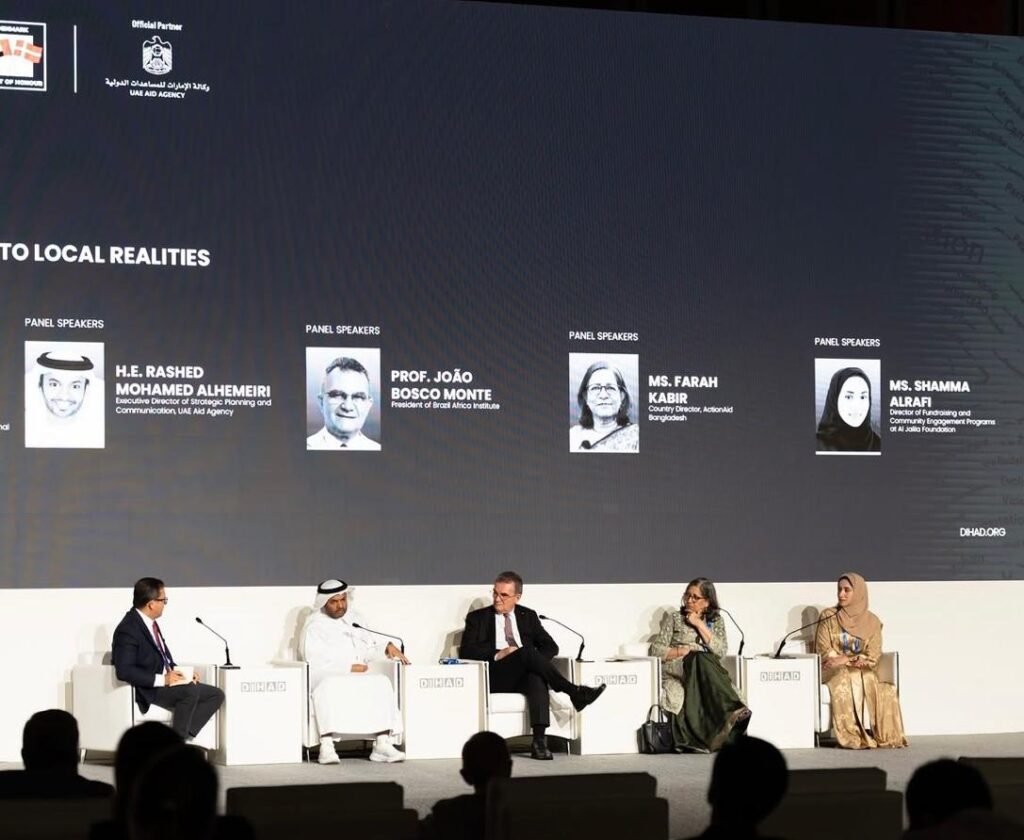
The President and Founder of the Brazil Africa Institute (IBRAF), Prof. João Bosco Monte, was one of the speakers in the main program of the Dubai International Humanitarian Aid and Development (DIHAD) 2026, a conference and exhibition held in Dubai, United Arab Emirates, from August 24 to 26. The event brought together government representatives, humanitarian organizations, international agencies, companies, NGOs, and research institutions to discuss current challenges in humanitarian action and development.
Prof. João Bosco took part in the panel “From Global Agendas to Local Realities: Turning Vision into Impact,” alongside Farah Kabir, Country Director of ActionAid Bangladesh; Shamma Al Rafi, Director of Fundraising Programs and Community Engagement at Al Jalila Foundation; and Rashed Alhemeiri, Executive Director of Strategic Planning and Communications at the UAE Aid Agency. The session was chaired by Xavier Castellanos Mosquera, Under-Secretary-General for National Society Development and Coordination at the International Federation of Red Cross and Red Crescent Societies (IFRC).
The panel addressed the challenges of translating global commitments and agendas into concrete, impactful action within communities, with a focus on local leadership, the participation of affected populations, and the effectiveness of humanitarian action. In his remarks, Prof. João Bosco emphasized the need to set priorities based on the real needs of local communities. “Instead of seeking answers in isolation, we should listen to the partners we trust and understand what needs to be done urgently. Ultimately, what we seek is social impact: to strategically use the resources we have, mobilize funding, and direct it toward what truly makes a difference.”
Exhibition
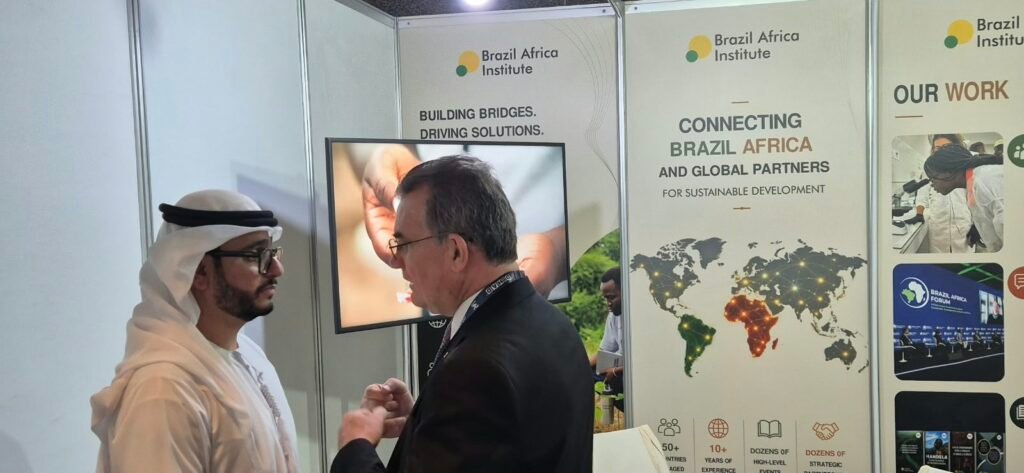
In addition to its program of discussions, DIHAD features an exhibition area bringing together organizations, companies, and institutions from the sector to showcase projects, technologies, and solutions focused on humanitarian action and development. IBRAF participated with an institutional booth, providing a space to showcase the Institute’s initiatives, strengthen connections, and expand dialogue with international partners.
The Digital School
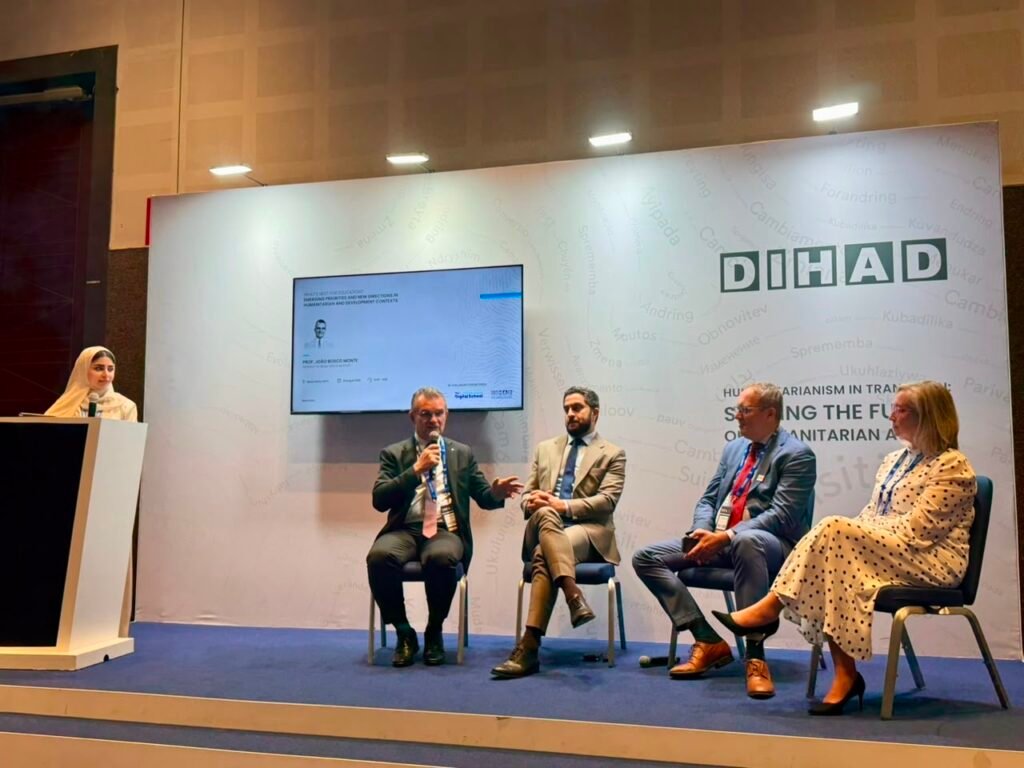
In parallel, also on August 26, Prof. João Bosco participated alongside The Digital School in a session held as part of the Global Education Summit for Development (GESD), at the Nexus Arena at Dubai World Trade Centre. Entitled “What’s Next for Education? Emerging Priorities and New Directions in Humanitarian and Development Contexts,” the session featured Maywand Jabarkhyl, CEO of FBMI; Fiona Jane Smith, Program Manager at CERT; and Yannick Du Pont, Founder of SPARK. The discussion focused on the role of technology, partnerships, and locally developed solutions in shaping the future of education in fragile and vulnerable contexts.
International Connections at DIHAD
IBRAF’s presence at DIHAD expanded its network of contacts with global partners and brought greater visibility to the Brazil–Africa perspective and the potential of South-South and triangular cooperation in strategic areas. The event also brought the Institute closer to international organizations and different stakeholders involved in initiatives addressing concrete development challenges.
“IBRAF’s participation strengthened connections with the United Arab Emirates, African countries, United Nations agencies, development institutions, NGOs, foundations, and the private sector, creating opportunities for future partnerships and concrete projects,” said Prof. João Bosco.